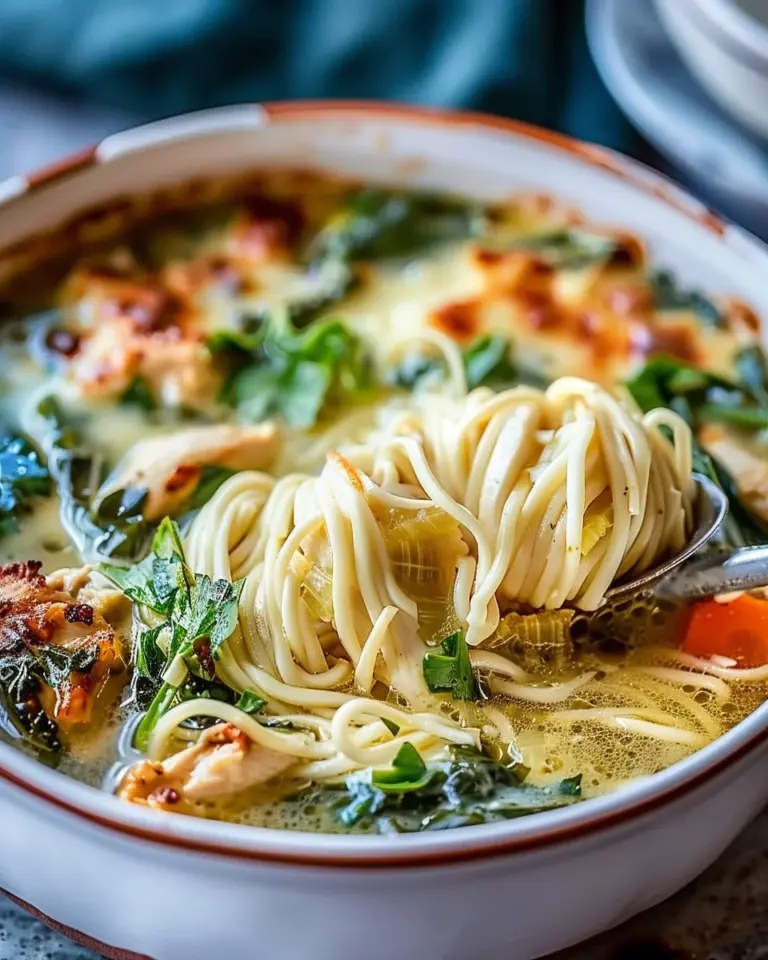
Chinese Chicken Noodle Soup
This Chinese chicken noodle soup is everything a comforting soup should be—deeply aromatic, rich with savory chicken flavor, and filled with tender noodles and fresh vegetables. Unlike Western chicken noodle soups that often rely on creaminess or canned shortcuts, this Chinese-inspired version brings together traditional Chinese aromatics like ginger, garlic, green onions, and Sichuan peppercorns to create a broth that’s soul-warming and revitalizing.
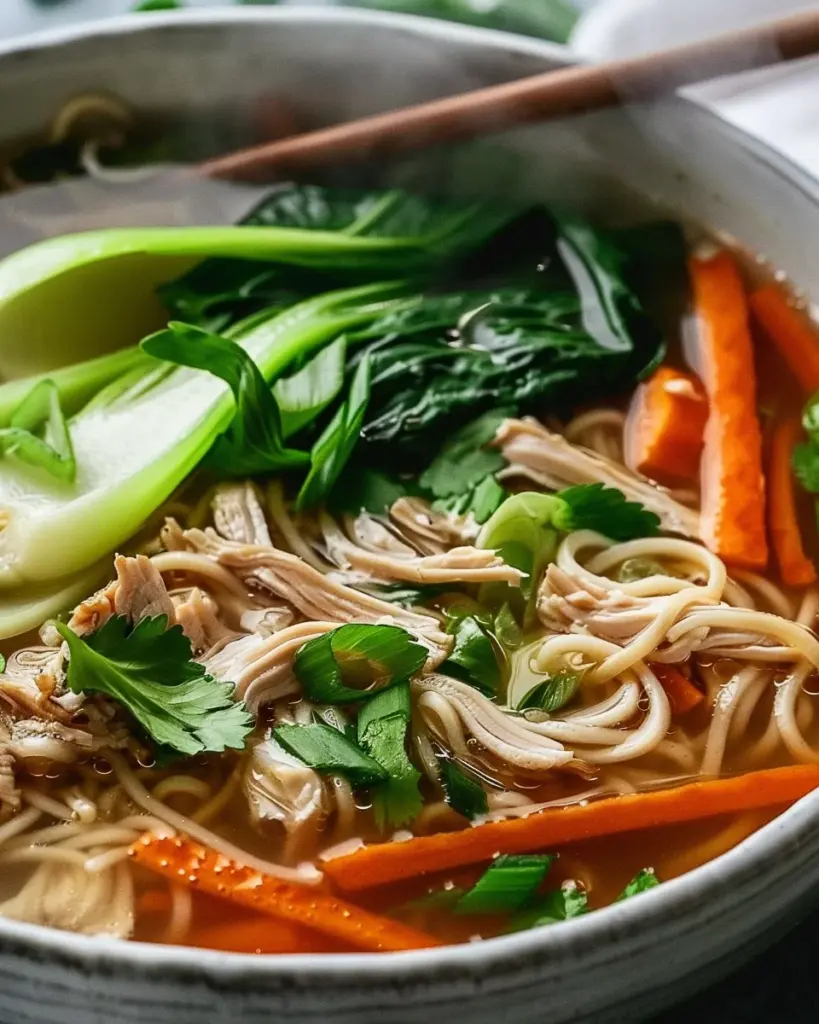
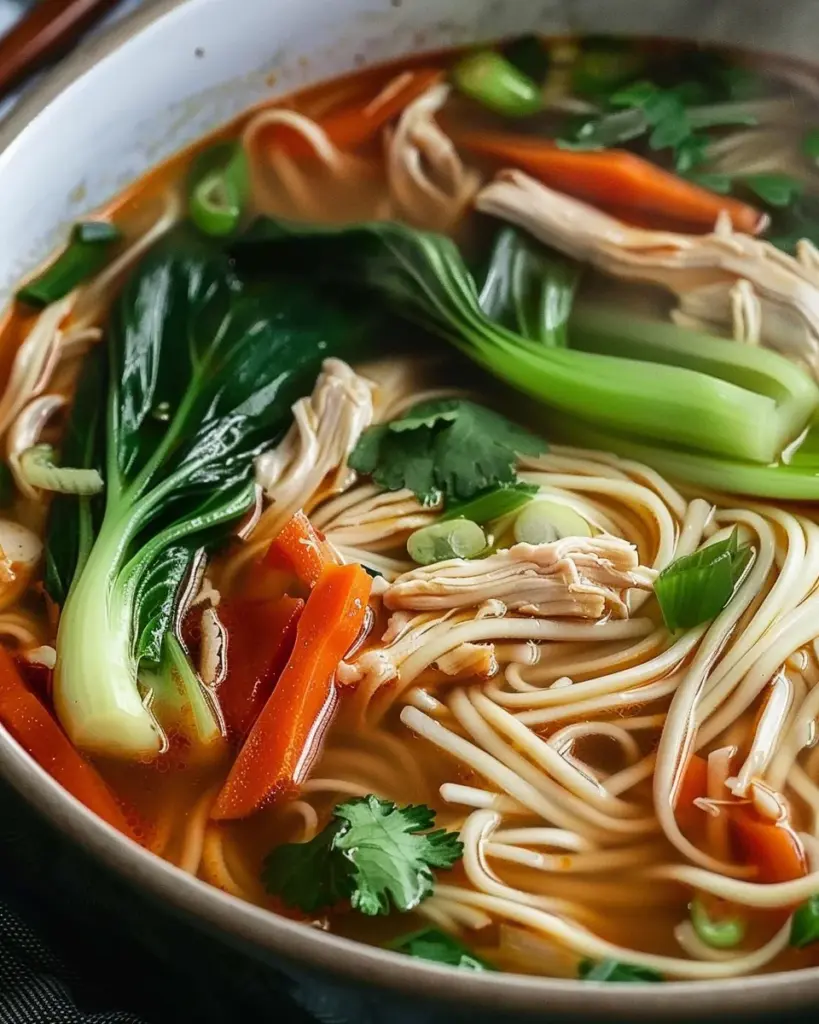
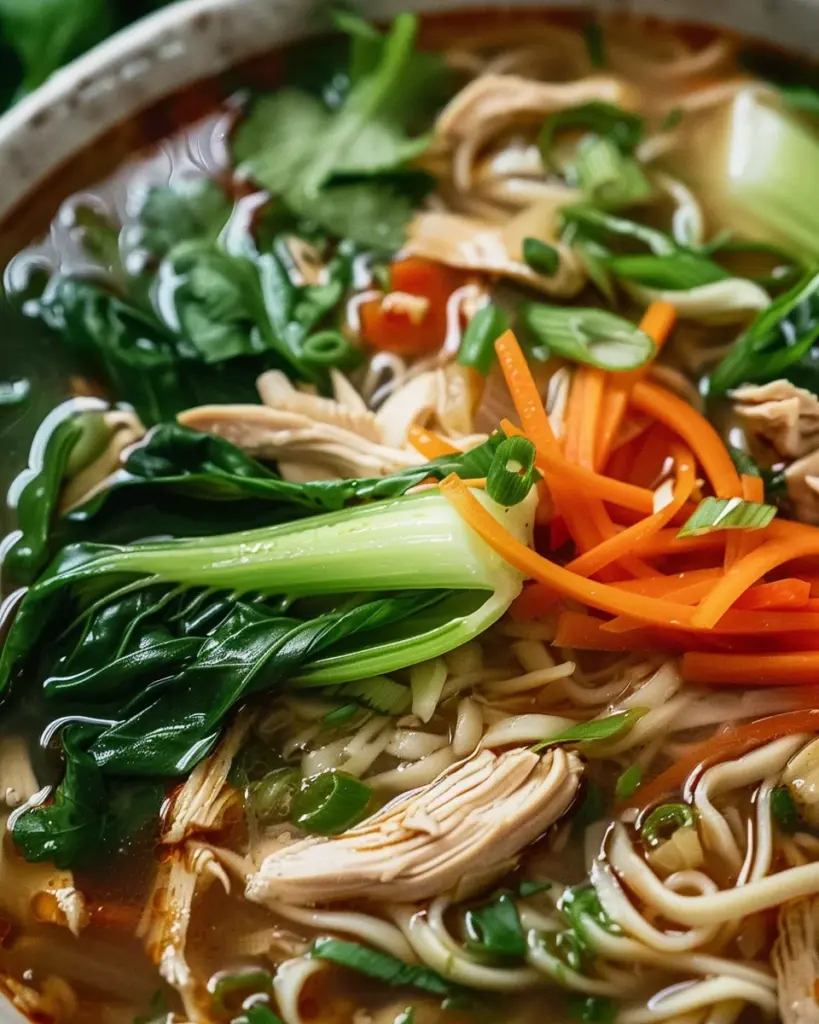
With just 25 minutes from start to finish, this recipe is perfect for busy weeknights, chilly evenings, or days when you’re feeling under the weather. The chicken thighs simmer into a flavorful base, while the bright crunch of bok choy and the sweet bite of carrot add texture and nutrition. And of course, the chewy noodles bring it all together into a satisfying, nourishing meal.
Why You’ll Love This Recipe
- Simple, fast, and flavorful
- Perfect for two servings—great for couples or solo cooking
- Uses pantry-friendly ingredients with authentic Chinese touches
- Easily adaptable for quicker or vegetarian versions
- Great for meal prep, reheats beautifully
- Delicious comfort food without being heavy
Preparation Phase & Tools to Use
Essential Tools and Equipment
To make this recipe efficiently and achieve the best flavor and texture, you’ll need the following tools:
- Heavy-bottomed pot or Dutch oven (3.5 qt or larger)
Retains heat evenly and prevents burning the aromatics or chicken. - Medium saucepan for noodles
Keeps noodles from absorbing too much of the broth and helps maintain the soup’s clarity. - Tongs and forks
Essential for flipping chicken and shredding it cleanly after cooking. - Fine mesh strainer or colander
Strains out large aromatics and spices, giving you a smooth and clean broth. - Measuring cups and spoons
Ensures precise quantities, especially for spices and broth. - Sharp knife and chopping board
For prepping ginger, garlic, green onions, and vegetables.
Importance of Each Tool
Each tool plays a specific role:
- The Dutch oven allows for steady simmering and heat distribution.
- A separate pot for noodles prevents starch from clouding the broth.
- A mesh strainer removes solids cleanly to create a pristine broth texture.
- Tongs and forks are needed for handling hot chicken easily and safely.
Preparation Tips
- Prep all ingredients ahead of time: This recipe moves quickly once started.
- Pat chicken thighs dry before browning to enhance the sear and deepen flavor.
- Keep aromatics in large pieces (sliced ginger, smashed garlic, halved green onions) if straining later.
- Choose your noodles: dried noodles are standard, but fresh work too with slight adjustments.
Ingredients for Chinese Chicken Noodle Soup
For the Broth
- 1 teaspoon olive oil (or chicken fat)
- 2 bone-in, skin-on chicken thighs (or boneless, skinless thighs)
- 4 cloves garlic, smashed
- 1 inch piece of ginger, sliced
- 1 green onion, halved
- ½ teaspoon cumin seeds
- ½ teaspoon Sichuan peppercorns (or black pepper)
- 1 teaspoon Shaoxing wine (or dry sherry)
- 4 cups chicken broth (or low-sodium chicken broth)
- ½ bunch cilantro, including leaves and stems (about 1 cup packed)
- 1 bay leaf
For the Soup
- ½ teaspoon soy sauce (or to taste)
- 3 oz dried noodles (or about 4 oz fresh noodles)
- 1 carrot, sliced
- 3 baby bok choy, cut into 6 pieces lengthwise
- 2 tablespoons fresh cilantro, chopped
Ingredient Notes and Substitutions
- Quicker version: Mince garlic, ginger, green onion; use powdered spices; skip straining step.
- Protein shortcut: Use 2 cups of shredded rotisserie chicken; skip chicken thigh browning and simmering.
- Noodle type: If using fresh noodles, increase to about 4 oz since they expand less.
Step-by-Step Instructions
1. Brown the Chicken
Heat olive oil in a 3.5 qt Dutch oven over medium heat until hot. Add chicken thighs, skin-side down, and cook undisturbed for about 1 minute or until golden brown.
Tip: Pat the chicken dry before searing for better browning and deeper flavor.
2. Add Aromatics and Spices
Flip the chicken. Add smashed garlic, sliced ginger, halved green onion, cumin seeds, and Sichuan peppercorns. Cook for 1 minute, stirring occasionally, until the aromatics become fragrant.
Tip: This quick sauté unlocks the essential oils and flavor compounds of the spices.
3. Build the Broth
Pour in Shaoxing wine to deglaze, followed by chicken broth, chopped cilantro (including stems), and bay leaf. Bring to a boil over medium-high heat.
Once boiling, reduce to a simmer and cover. Cook for 20 minutes.
Tip: Simmering covered allows the chicken and aromatics to fully infuse the broth.
4. Cook the Noodles Separately
While the broth simmers, bring a separate pot of water to a boil. Cook the noodles according to the package instructions. Drain and set aside.
Why cook separately? To prevent the noodles from absorbing too much broth and turning mushy.
5. Shred the Chicken
Use tongs to remove the chicken thighs from the broth. Transfer to a plate and let cool slightly. Discard the skin and shred the meat using two forks.
Optional: If using rotisserie chicken, add shredded chicken directly in step 8.
6. Strain the Broth
Place a mesh strainer over a bowl or large container. Pour the broth through it to remove the garlic, ginger, green onion, and cilantro stems. Return the strained broth to the pot.
Tip: Straining ensures a smooth, professional-looking broth.
7. Adjust the Seasoning
Add soy sauce to the strained broth and taste. Adjust salt or soy sauce to your liking. Bring the broth back to a boil over medium-high heat.
Optional: Add a splash of sesame oil or chili oil here for an extra layer of flavor.
8. Add Vegetables
Add sliced carrots and simmer for 3 minutes. Then add bok choy and cook for another 1–2 minutes, until just tender.
Tip: Add vegetables near the end to retain their color and texture.
9. Reintroduce the Chicken
Add the shredded chicken back into the pot and stir to warm through.
10. Assemble the Bowls
Divide the cooked noodles into serving bowls. Ladle the hot broth, vegetables, and chicken over the noodles. Garnish with chopped cilantro.
Serve immediately while hot.
How to Serve Chinese Chicken Noodle Soup for Maximum Enjoyment
Serving this Chinese chicken noodle soup isn’t just about getting it into a bowl—it’s about enhancing the overall experience. Presentation, garnishes, and thoughtful pairings elevate the meal from a simple soup to a satisfying culinary moment.
Serving Ideas
- Use deep soup bowls to maintain heat and showcase the broth, noodles, and vegetables.
- Garnish with fresh herbs: a sprinkle of chopped cilantro or a whole sprig adds freshness and color.
- Drizzle of sesame oil: adds depth and fragrance right before serving.
- Optional chili oil or crushed red pepper flakes: for those who enjoy heat.
- Add a soft-boiled egg: for a richer, ramen-style presentation.
Ideal Occasions to Serve
- Quick weeknight dinners for two
- Light lunch with a side salad or steamed dumplings
- Cozy meal for cold or rainy days
- Comfort food when recovering from illness
Beverage Pairings
- Jasmine or green tea to cleanse the palate
- Light white wine such as Riesling or Pinot Grigio
- Ginger-lemon infused hot water for a soothing combo
Common Mistakes To Avoid & How to Perfect the Recipe
Making soup may seem straightforward, but a few key errors can impact the flavor, texture, and overall satisfaction of your Chinese chicken noodle soup. Here’s how to avoid them:
1. Cooking Noodles in the Broth
Mistake: Cooking noodles directly in the soup causes them to absorb the broth and become mushy.
Fix: Always cook noodles separately. Add them to serving bowls and pour hot broth over them to keep the texture perfect.
2. Skipping Aromatics or Using Only Plain Broth
Mistake: Omitting aromatics like ginger, garlic, and green onion leads to a flat-tasting broth.
Fix: These ingredients are essential to building layers of flavor. Don’t skip them. Simmer them with the chicken and strain later.
3. Using Skinless, Boneless Chicken Without Compensating for Flavor
Mistake: While convenient, skinless chicken doesn’t impart enough richness.
Fix: Use bone-in, skin-on thighs when possible. Alternatively, enhance broth with homemade stock, extra herbs, or umami-rich additions like mushrooms.
4. Over-Boiling the Broth
Mistake: A rolling boil can make the broth cloudy and overpower aromatics.
Fix: Simmer gently. Bring to a boil, then reduce heat and cover for even flavor extraction.
5. Not Straining the Aromatics
Mistake: Leaving chunks of ginger, garlic, and spices makes the soup less enjoyable to eat.
Fix: Strain the broth using a fine mesh strainer for a clean finish.
6. Overcooking Vegetables
Mistake: Cooking bok choy and carrots too long makes them limp and dull.
Fix: Add carrots 3 minutes before the end, bok choy only 1–2 minutes before serving for vibrant color and crunch.
7. Delaying Serving After Assembly
Mistake: Letting the soup sit too long after assembling causes noodles to absorb the broth and become soggy.
Fix: Serve immediately after ladling hot broth over noodles.
8. Ignoring Final Seasoning Adjustments
Mistake: Not tasting the soup before serving can result in under-seasoned broth.
Fix: Taste and adjust with soy sauce or a splash of Shaoxing wine before serving.
Side Dish Recommendations
Enhance your Chinese chicken noodle soup meal with complementary side dishes. These options offer contrast in texture, flavor, and nutrition.
Steamed Jasmine Rice
A neutral side that complements the bold broth and offers something to soak up the extra liquid. Fluffy and aromatic, it balances spicy or salty notes.
Chinese Cucumber Salad with Sesame
Cool, crunchy, and refreshing. A chilled cucumber salad with sesame oil, vinegar, and garlic balances the warmth of the soup and adds a textural contrast.
Garlic-Scallion Greens
Lightly sautéed greens like kai lan or bok choy with garlic and scallions. This side adds vitamins and makes the meal feel more complete without overpowering the soup.
Egg Drop Soup
For a double-soup combo, egg drop soup offers a silky texture and pairs beautifully with the chewy noodles. Serve as an appetizer or side.
Scallion Pancakes
Crispy on the outside and chewy on the inside, scallion pancakes are perfect for dipping or enjoying as a savory contrast to the broth.
Pickled Vegetables
Crunchy, tangy pickles like Chinese pickled radish or cabbage cleanse the palate and cut through the richness of the soup.
Chili Oil Dumplings
Pan-fried or steamed dumplings dressed in chili oil offer a spicy, hearty companion to the lighter broth-based soup.
Sesame Chicken Spring Rolls
Crisp on the outside with a flavorful sesame and chicken filling, these rolls are ideal for dipping into a soy or chili sauce alongside your main dish.
Recipe Tips for Perfect Chinese Chicken Noodle Soup
Even though this soup is easy to make, a few strategic choices can dramatically enhance its flavor and texture. Follow these expert tips to take your Chinese chicken noodle soup from good to outstanding:
Use Bone-In, Skin-On Chicken Thighs
The bones and skin add depth and richness to the broth. Browning the chicken first creates complex flavor through caramelization.
Tip: Always pat the chicken dry before browning to achieve a golden, crisp sear.
Simmer Gently with the Lid On
A gentle simmer extracts maximum flavor from the aromatics without making the broth cloudy. Keeping the pot covered helps infuse the broth more efficiently.
Cook Noodles Separately
Cooking noodles in the soup leads to a cloudy broth and mushy texture. Cook them in a separate pot and assemble right before serving.
Strain the Aromatics
Straining out the large pieces of garlic, ginger, green onion, and spices ensures a smooth, clean broth and better presentation.
Taste and Adjust Seasoning at the End
Soy sauce should be added to taste, not as a fixed amount. Tasting the broth before serving guarantees balanced saltiness and umami.
Enhance with Final Garnishes
A few drops of sesame oil, a pinch of chili flakes, or fresh cilantro can significantly lift the final flavor profile.
Storage and Reheating Instructions
Proper storage and reheating are essential to preserve the taste and texture of your Chinese chicken noodle soup. Follow these guidelines to enjoy leftovers without compromising quality.
Storage
- Refrigerator: Store broth and solids in an airtight container for up to 3–4 days. Keep cooked noodles in a separate container to avoid them absorbing too much liquid.
- Freezer: Freeze only the broth (with or without chicken and vegetables). Avoid freezing noodles, as they will turn mushy. Broth lasts up to 2–3 months in airtight containers.
Reheating
- Stovetop: Reheat the broth over medium heat until hot. Add noodles only when the broth is ready, just before serving.
- Microwave: Combine broth and noodles only right before microwaving. Cover and heat in 1-minute intervals, stirring between, until heated through.
- Avoid prolonged simmering: Once noodles are added, avoid reheating multiple times. They absorb broth and lose texture with each cycle.
Tip for Best Results
If planning for leftovers, cook extra noodles but store them dry or lightly oiled. Reheat only what you’ll eat to preserve texture.
Frequently Asked Questions (FAQs)
These commonly asked questions address key concerns home cooks have about Chinese chicken noodle soup.
Can I use boneless, skinless chicken thighs?
Yes, but bone-in, skin-on thighs develop deeper flavor. If using boneless, consider boosting the broth with extra aromatics or pre-made stock.
What kind of noodles should I use?
Thin dried Chinese wheat noodles or egg noodles work best. If using fresh noodles, use slightly more—about 4 oz instead of 3 oz dried. Cook separately.
Can I make the broth ahead of time?
Yes. You can simmer the broth, strain it, and store it in the refrigerator for 3–4 days or freeze it for up to 3 months. When ready to eat, simply reheat and add freshly cooked noodles and vegetables.
Can I make it vegetarian?
Absolutely. Use vegetable broth, skip the chicken, and add tofu or mushrooms for substance. Keep the same aromatics for flavor.
Why is my broth cloudy?
A rolling boil or skipping the straining step can cause a cloudy broth. Always simmer gently and strain the solids for clarity.
Can I skip the straining?
Yes, but your broth will have more texture and stronger flavors. Mince aromatics finely if you plan not to strain.