homemade soft pretzel bites
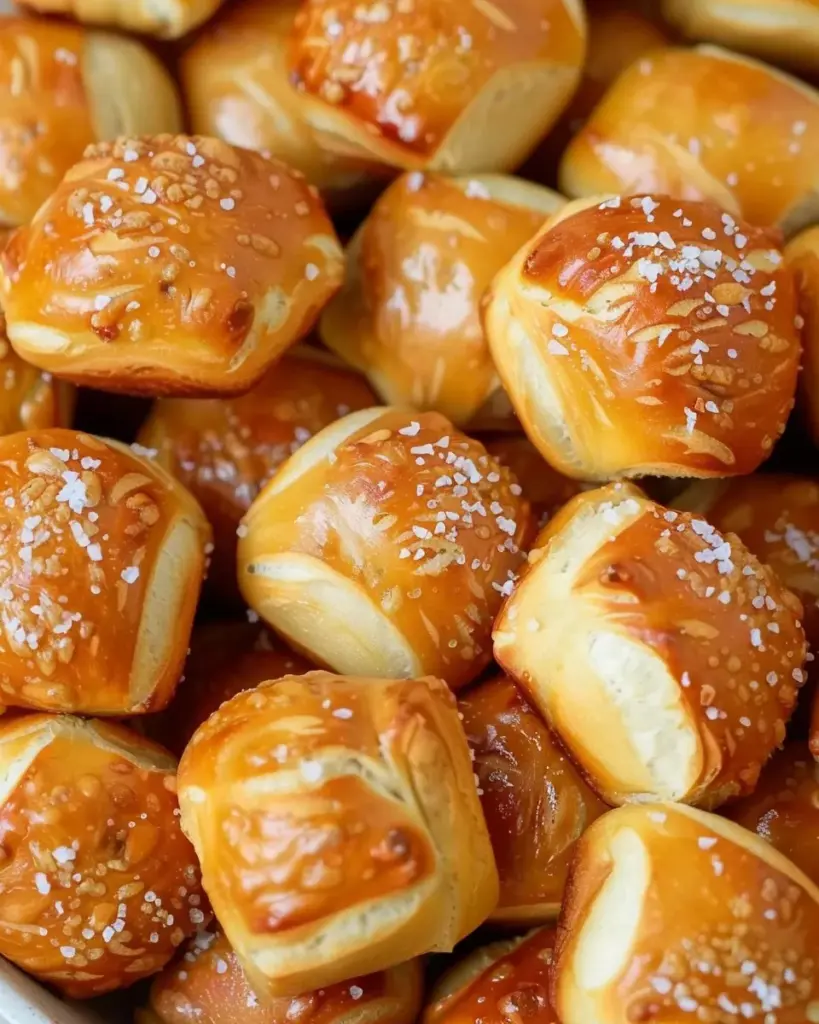
This soft pretzels recipe delivers chewy, golden‑brown pretzel bites that are perfect for snacking. With a warm yeast dough enriched by butter and a brief boil in a baking‑soda bath, you’ll get that distinctive chewy crust and classic flavor that makes pretzels so addictive. You’ll love serving these warm, either straight out of the oven or with a dipping sauce (spicy cheese or mustard works especially well). The fun of rolling ropes and cutting into bite‑sized pieces makes this recipe ideal for sharing.
Unique features:
- A baking soda bath gives the crust its signature texture and flavor.
- Rolling into ropes and slicing into bite‑sized pieces adds a playful twist compared to traditional knot shapes.
- Versatility: you can keep them simple with coarse salt or switch to cinnamon‑sugar for a sweet variation.
Why readers will love it:
- From‑scratch dough gives that fresh‑baked bakery feel.
- Pretzel bites are fun to make and share, and perfect for casual get‑togethers or cozy evenings.
- The technique is straightforward and uses familiar ingredients, making it accessible even if you don’t bake often.
- They taste significantly better (and fresher) than many store‑bought alternatives.
Preparation Phase & Tools to Use
Essential Tools and Equipment
- Stand mixer with paddle or dough hook (or a large mixing bowl and sturdy hands if kneading by hand)
- Dough hook (if using mixer)
- Sharp knife, pizza cutter or bench scraper (for dividing dough)
- Large pot for the baking‑soda bath
- Slotted spoon or spatula (for transferring boiled bites)
- Two baking sheets
- Silicone baking mats or parchment paper (plus butter or non‑stick spray)
- Kitchen thermometer (optional, to check water temperature)
- Clean towel or plastic wrap (to cover dough)
Importance of Each Tool
- Stand mixer (or mixer attachment) reduces fatigue and ensures consistent kneading and dough development.
- Dough hook helps with kneading the dough efficiently and achieving proper gluten development.
- Sharp knife/pizza cutter/bench scraper helps divide dough cleanly and quickly without deforming the pieces.
- Large pot allows safe boiling of multiple pretzel bites in the baking‑soda bath.
- Slotted spoon/spatula allows you to remove boiled dough pieces without excess water, which helps maintain crust texture.
- Baking sheets + silicone mats/parchment provide a reliable non‑stick surface and even baking.
- Kitchen thermometer ensures water is at proper “lukewarm” temperature for yeast activation and dough handling.
- Covering towel/plastic wrap keeps dough from drying out during resting phases.
Preparation Tips
- Measure flour by spooning into the cup and leveling or better yet use a kitchen scale for accuracy. (Many sources note flour measurement matters for dough texture.)
- Ensure water is lukewarm (~100 °F/38 °C) when activating yeast — too hot and you’ll kill the yeast; too cold and it won’t activate.
- When kneading, aim for the dough to feel soft but elastic, not sticky or dry. Perform a windowpane test (stretch a small piece of dough; you should see light through it without tearing) to check gluten development.
- After shaping ropes, if the dough shrinks back when you roll it, cover it for 10 minutes to relax the gluten before continuing.
- The baking‑soda bath must be at a full rolling boil so the dough develops the classic crust quickly; avoid over‑boiling which can lead to a metallic taste.
- Immediately after removing the boiled bites, sprinkle with coarse salt (while still wet) so it adheres properly.
- Bake in a preheated oven; ensure the baking sheets are positioned so hot air circulates and the crust browns evenly.
Ingredients
Dough
- 1½ cups (360 ml) warm water (lukewarm, approx. 100 °F / 38 °C)
- 2¼ teaspoons (7 g) instant or active dry yeast (1 standard packet)
- 1 Tablespoon brown sugar or granulated sugar
- 1 teaspoon salt
- 1 Tablespoon (14 g) unsalted butter, melted and slightly cooled
- 3¾ – 4 cups (469‑500 g) all‑purpose flour (spooned & leveled), plus more for hands and work surface
Topping & Boiling Bath
- Coarse salt or coarse sea salt, for sprinkling
- ½ cup (120 g) baking soda
- 9 cups (2,160 ml) water
Serving
- Spicy cheese sauce or your favourite mustard, for serving
Step‑by‑Step Directions
- Make the dough: In the bowl of a stand mixer fitted with paddle or dough hook, whisk together the warm water, yeast, and sugar. Cover and let sit for 5 minutes until foamy — this confirms the yeast is active.
- Add salt, melted butter, and 3 cups (375 g) flour. Beat on low speed for 1 minute. Scrape down sides, then add ¾ cup (95 g) flour. Beat on low until dough pulls away from the sides of the bowl, about 2 minutes. If the dough is very sticky, add up to ¼ cup more flour and beat for 1 more minute.
- Knead the dough: If using a mixer, switch to the dough hook and knead for an additional 5 minutes. If kneading by hand, turn dough onto a lightly floured surface and knead for 5 minutes, adding small amounts of flour as needed so the dough becomes slightly tacky but not dry. The dough should feel soft and elastic. Perform the windowpane test to confirm proper gluten development.
- Rest the dough: Cover the dough lightly with a towel and allow it to rest for 10‑30 minutes. This resting period lets the gluten relax and makes shaping easier. Meanwhile prepare for the baking soda bath.
- Preheat oven and prepare pans: Preheat your oven to 400 °F (204 °C). Line two baking sheets with silicone baking mats or parchment paper lightly greased with butter or non‑stick spray. Set aside.
- Shape the dough: On a lightly floured surface (use minimal extra flour so the dough doesn’t dry out), divide dough into 6 equal pieces. Roll each piece into a ~20‑inch rope. If the dough resists stretching (bounces back), cover for 10 minutes to relax the gluten, then continue. Cut ropes into 1.5‑2 inch pieces to create pretzel bites (you’ll yield about 30 bites total).
- Prepare the baking soda bath: In a large pot, combine 9 cups of water and ½ cup baking soda. Bring the mixture to a rolling boil.
- Boil the pretzel bites: Drop 8‑10 pretzel bites at a time into the boiling bath for 10‑15 seconds. Do not boil longer — over‑boiling may cause a metallic taste. Remove with slotted spoon/spatula, let excess water drip off, then place on the prepared baking sheets. Immediately sprinkle coarse sea salt for classic flavour, or leave plain if using cinnamon sugar topping.
- Bake pretzel bites: Bake in the preheated oven for ~15 minutes or until golden brown and cooked through. Remove from oven and serve warm with your chosen dipping sauce.
- Storage: Store leftover pretzel bites covered at room temperature for up to 3 days. To re‑crisp: microwave briefly or bake at 350 °F (177 °C) for ~5 minutes.
Tips or Variations
- For a sweet variant, skip the coarse salt topping and instead sprinkle with a cinnamon‑sugar mixture after baking or just before serving.
- If you want make‑ahead convenience, you can refrigerate the boiled but unbaked pretzel bites (covered) for up to 24 hours before baking.
- To achieve deeper browning and chewiness, some recipes suggest slightly higher oven temperatures.
- If you’re shaping into full pretzel knots instead of bites, roll ropes ~18‑20 inches and twist into the classic pretzel shape before boiling and baking.
- To enhance flavour, you might brush warm pretzels with melted butter immediately after baking for a richer finish (this also helps salt adhere).
Serving Suggestions
These tips will help you elevate your soft pretzels into a full experience.
Side Dish Recommendations
- Spinach & artichoke dip — rich and creamy, it pairs beautifully with the chewy texture of pretzels.
- Broccoli‑cheddar soup — warm and comforting, a superb contrast to salty pretzel bites. C
- Hummus — for a healthier, savoury dip option with great flavour.
- Dulce de leche — transform your pretzels into a sweet treat with caramel‑style sauce.
- Smoked cream cheese — adds a gourmet twist and pairs nicely with coarse salt pretzels.
- Tzatziki sauce — for a cool, tangy option especially if you prefer lighter tastes.
- Strawberry jam — sweet and simple, perfect if you use cinnamon‑sugar toppings instead of salt.
- Chocolate fondue — dessert‑style serving: warm pretzels dipped into melted chocolate.
Common Mistakes to Avoid & How to Perfect the Recipe
Here are frequent errors home‑bakers make with pretzels, and how you can sidestep them.
- Over‑hydrating the dough. If the dough is too wet, it becomes difficult to handle and won’t hold shape during boiling and baking.
- Using expired or inactive yeast. If the yeast doesn’t foam during activation, the dough will be dense and lack rise.
- Failing the windowpane test. If you can’t stretch the dough thin and translucent without tearing, the gluten network isn’t developed yet.
- Incorrect baking soda bath time or concentration. Boiling too short or too long, or using wrong ratio, can lead to a pale crust, metallic taste, or loss of signature chewiness.
- Too much flour during shaping. Over‑flouring can dry the dough, interfere with stretching ropes, and reduce the pretzel chew.
- Not giving dough a rest or letting gluten relax. If dough resists shaping, you’ll end up with tight, tough bites instead of soft, elastic ones.
- Baking at the wrong temperature or too long/short. That can affect crust colour and interior texture.
- Applying salt or toppings incorrectly. For example, applying coarse salt too early or too much draws moisture and may make stored pretzels soggy.
How to perfect it
- Weigh your flour for consistency; aim for dough that is slightly tacky but not sticky.
- Activate your yeast in water at ~38‑43 °C (100‑110 °F) and wait for foam to confirm viability.
- Knead until dough is smooth and elastic, then rest before shaping.
- Make sure the baking soda bath is at a full rolling boil and drop bites briefly (10‑15 seconds or per your process) so the crust forms correctly.
- Immediately after boiling and draining, place pieces on sheets, sprinkle coarse salt if using, and bake in a preheated oven for the recommended time.
- Keep shaping surface lightly floured but avoid excess flour; if ropes resist stretching, cover for a short rest to relax gluten.
- Monitor the bake colour: golden‑brown is ideal. Remove promptly to avoid drying out.
- For toppings like cinnamon‑sugar or sweet versions, brush warm bites with melted butter then toss in sugar‑cinnamon; reserve coarse salt for savoury versions.
By paying attention to these details, you’ll avoid common pitfalls and produce pretzel bites that are chewy, well‑shaped, and delicious.
Recipe Tips
- Use a kitchen scale for flour measurement. Accurate weighing reduces risk of overly dry or too sticky dough.
- Do the windowpane test: pull a small piece of dough until it becomes thin enough for light to pass through, without tearing. This confirms proper gluten development.
- Ensure water for yeast is lukewarm (~100‑110 °F / 38‑43 °C). If too hot, yeast may die; too cold and it won’t activate well.
- After shaping into ropes, if dough shrinks back when rolled, cover and rest 10 minutes to allow gluten to relax — easier shaping, better texture.
- Boil in the baking soda bath long enough to form the crust but not too long (10‑15 seconds or adjusted as needed), to avoid off‑flavours or overly dense crust.
- Immediately after boiling and draining, place bites on the prepared baking sheets and sprinkle salt while still slightly wet, so the salt adheres well.
- Use parchment paper or silicone baking mats to prevent sticking and ensure even browning.
- If making ahead or freezing, wait to add coarse salt until just before baking or serving; salt draws moisture and can make stored pretzels soggy.

Storage and Reheating Instructions
Storage:
- Store leftover bites in an airtight container at room temperature for up to ~3 days.
- For longer storage, once fully baked and cooled (without salt on top), freeze in a freezer‑safe container or zip‑top bag for up to 2‑3 months.
- If storing, avoid adding coarse salt before storing as salt can draw moisture and degrade texture.
Reheating:
- Oven method (best texture): Preheat to ~350 °F (177 °C). Lightly mist or brush pretzels with water or melted butter, bake ~5‑7 minutes or until warmed through and exterior crisped.
- Air‑fryer method (good for crisp exterior): ~325 °F for 3‑5 minutes, mist or brush with water/butter first.
- Microwave method (fastest, but texture trade‑off): Warm for ~20‑30 seconds, then optionally crisp in oven or toaster if needed.
- From frozen: No need to fully thaw. Bake at ~350‑400 °F (177‑204 °C) for ~8‑20 minutes depending on size.
FAQs
Q: Can I refrigerate the dough overnight instead of shaping immediately?
A: Yes — you can refrigerate the dough after initial mixing or you can even refrigerate the boiled but unbaked bites for up to ~24 hours before baking. This can deepen flavour and allow you to bake later.
Q: What if my dough is too sticky or too dry?
A: If dough is very sticky, add flour a tablespoon at a time during kneading until it becomes soft but not tacky. If too dry, it will resist stretching and shaping; better to knead slightly longer or allow a short rest so moisture distributes evenly.
Q: Why is the baking soda bath so important?
A: The alkaline bath gelatinizes the surface of the dough quickly and promotes the signature chewiness and golden‑brown crust typical of pretzels. Skipping it will yield a more bread‑like texture and lighter colour.
Q: My shaped pieces puffed up in the bath and lost shape — how do I prevent that?
A: Ensure you roll the ropes tightly and cut cleanly. Boil only briefly — excessive time or overly warm dough may cause too much puffing. Also make sure dough has had enough rest to relax gluten before shaping.
Q: Can I top with different flavours instead of coarse salt?
A: Absolutely. After boiling, you can top with cinnamon‑sugar for a sweet version, or try garlic‑herb, shredded cheese, everything‑bagel seasoning, etc. For sweet versions, avoid salt and ensure toppings don’t draw moisture during storage.