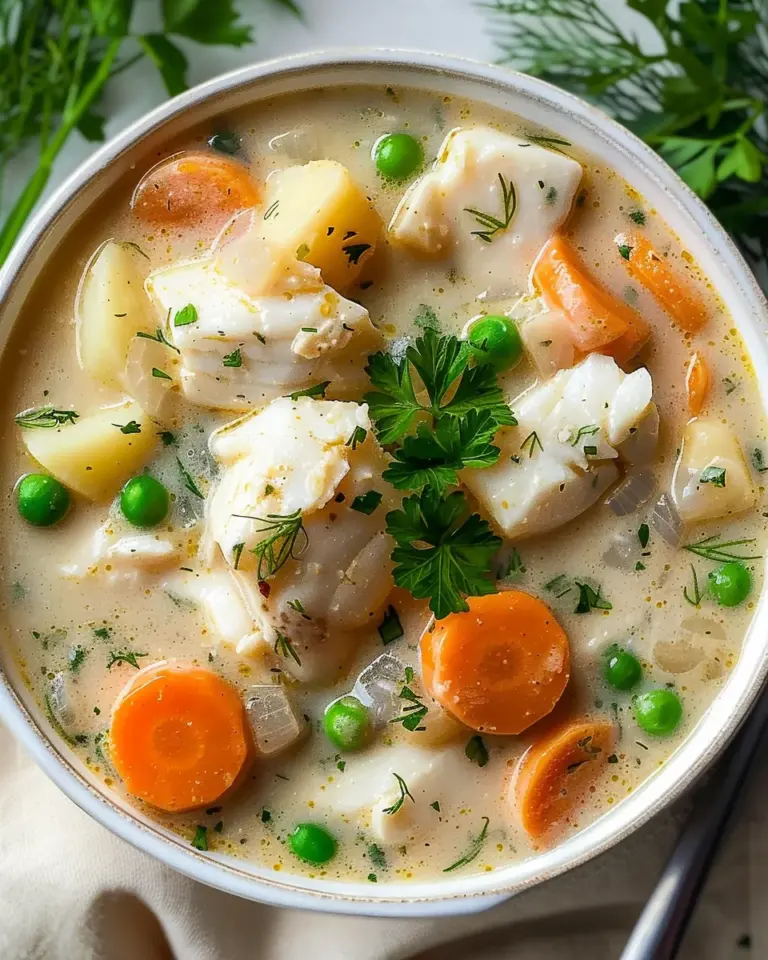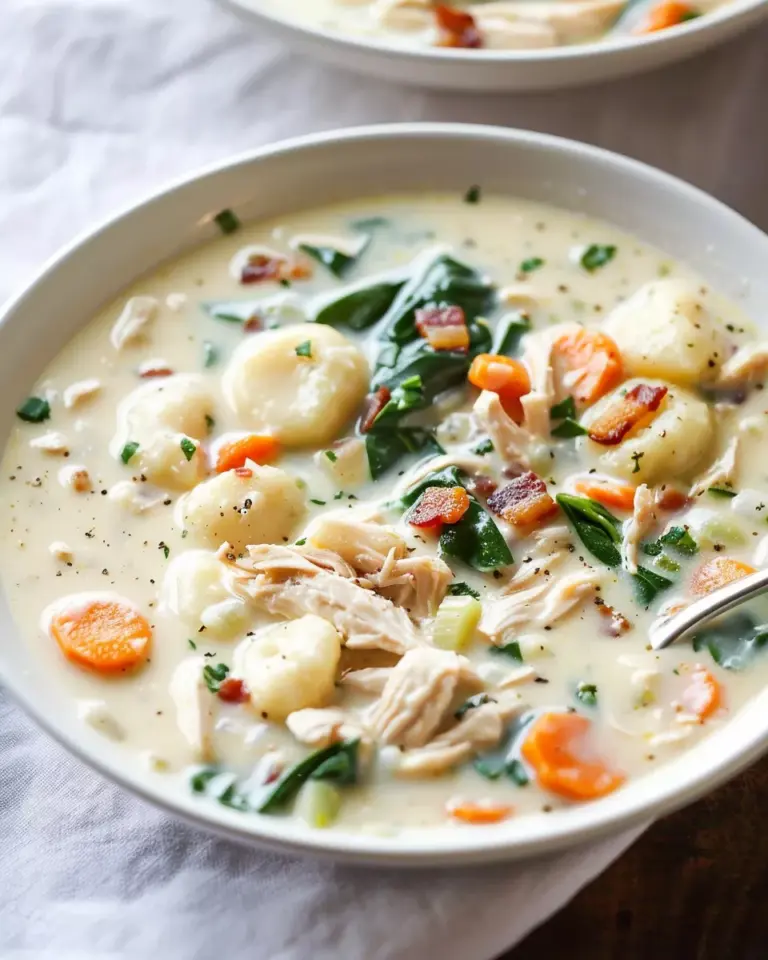
Avgolemono Soup: Greek Healing Lemon Soup
Avgolemono Soup is a heart‑warming Greek classic that combines silky chicken broth with the bright zest of fresh lemons and creamy egg yolks, creating a comforting dish perfect for chilly days. This nourishing soup is not just a meal; it’s a nostalgic journey back to family gatherings and cherished memories. With its rich flavours and velvety texture, Avgolemono Soup is sure to be a crowd‑pleaser at your dinner table.
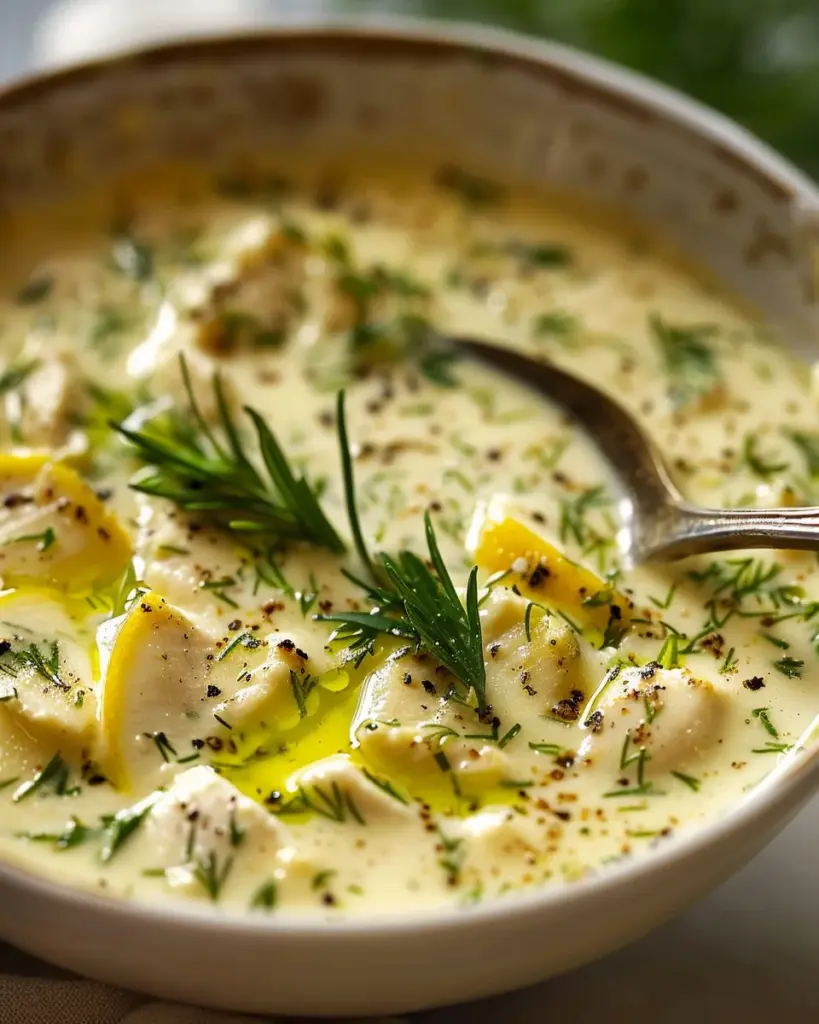
Why You’ll Love It
- It brings together simple, wholesome ingredients—chicken, lemon, egg—that work in harmony.
- Its bright lemon note lifts the dish and prevents it from feeling heavy.
- The creamy texture from the eggs makes it feel indulgent, yet it remains light and soothing.
- It appeals across seasons: great for a cosy winter night or a transitional spring evening.
- It holds nostalgic value: for many families, this soup is linked to comfort, home‑cooking, childhood, recovery from illness, and communal meals.
Preparation Phase & Tools to Use
Essential Tools and Equipment
- A heavy‑bottomed saucepan or soup pot: ensures even heating and helps avoid scorching when tempering eggs.
- A whisk: to smoothly blend egg yolks and lemon juice, and later to temper the eggs without curdling.
- A ladle or measuring cup: for transferring hot broth into the egg‑lemon mixture slowly (tempering).
- A wooden spoon or heat‑resistant spatula: to stir once you add the tempered egg‑lemon back into the pot gently.
- A sharp knife & chopping board: to dice the chicken and chop herbs (dill or parsley).
- A microplane or fine grater: to zest the lemon for added brightness (optional but recommended).
Importance of Each Tool
- The heavy‑bottomed pot ensures that heat distributes evenly and avoids “hot spots” which can cause the eggs to curdle when added.
- The whisk ensures the egg yolks + lemon juice are fully emulsified and smooth, avoiding lumps.
- The ladle or measuring cup allows you to slowly integrate hot broth into the cold egg‑lemon mixture in a controlled way. This step (tempering) is critical to prevent curdling.
- Stirring with a wooden spoon/spatula allows gentle incorporation of the egg mixture back into the main soup without breaking the emulsion.
- The knife/chopping board let you prepare uniform pieces of chicken so they cook evenly; herbs chopped finely release flavour without overwhelming the texture.
- The zesting tool gives you the fine lemon zest, which adds aromatic zing without needing extra juice (and keeps the balance intact).
Preparation Tips
- Use freshly‑squeezed lemon juice rather than bottled, for the best vibrant flavour.
- When sautéing the chicken, ensure the pieces are similar size so they cook uniformly—about 5‑7 minutes until golden.
- Once the broth is simmering and the chicken cooked, reduce the heat before adding the egg‑lemon mixture: avoid high heat after adding the eggs.
- When you add the tempered egg mixture back in, stir gently and keep the mixture below boiling—do not let it come to a rolling boil; that will cause the egg to scramble.
- If you wish, you can include rice or orzo in the broth to yield a thicker texture (many traditional versions do).
- Always taste and adjust the seasoning (salt, pepper, lemon) at the end, because the egg‑lemon will slightly mute flavours.
Ingredients
Serves approx. 4
- 1 lb boneless skinless chicken breast, diced
- 4 cups low‑sodium chicken broth
- 3 large egg yolks
- ¼ cup fresh lemon juice (about 2 lemons)
- Zest of 1 lemon
- 2 tbsp fresh dill or parsley, chopped
- Salt and pepper to taste
- 2 tbsp olive oil
Step‑by‑Step Directions
- Heat the olive oil in your soup pot over medium heat. Add the diced chicken and sauté for 5‑7 minutes until the pieces are golden brown and opaque inside.
- Pour in the chicken broth. Bring to a gentle simmer and cook for about 15 minutes, to ensure the chicken is cooked through and the broth is infused.
- Meanwhile, in a separate bowl, whisk together the egg yolks, lemon juice, and lemon zest until you have a smooth, slightly frothy mixture.
- To temper the eggs: using the ladle or measuring cup, slowly scoop some of the hot broth (about ½‑1 cup) and add it gradually to the egg‑lemon mixture while whisking continuously. This warms the eggs and prevents curdling.
- Once tempered, pour the egg‑lemon mixture gently back into the soup pot, stirring constantly and gently so the mixture blends in. Crucially: keep the heat low and avoid boiling after this point.
- Add the chopped dill or parsley. Season with salt and pepper to taste. Stir once more.
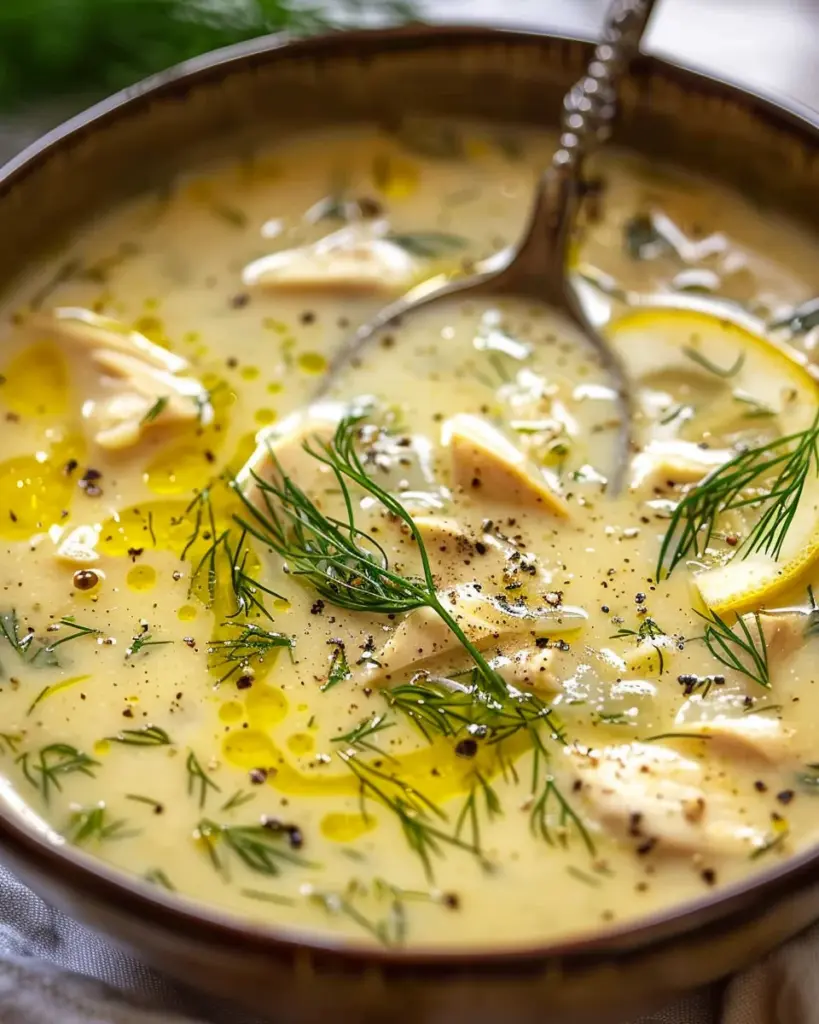
- Serve immediately, while warm, in bowls. Optionally garnish with a little extra parsley/dill and a thin slice of lemon or a drizzle of olive oil for finish.
Tips or Variations
- If you prefer a thicker soup, you can add ½ cup of cooked rice or orzo into the broth during the simmer in step 2; the starch will enrich the texture.
- You could substitute parsley if you dislike dill (the flavour will shift slightly, but still excellent).
- For a lighter version, you could omit the chicken breast and use shredded rotisserie chicken added at the end.
- If you want more lemony brightness, you can increase the lemon juice by 1‑2 tbsp; but balance carefully so the eggs still set smoothly.
- Vegetarians can adapt by using vegetable broth and adding cooked white beans or chickpeas in place of chicken.
Serving Suggestions
Here are some excellent ways to serve your Avgolemono Soup alongside complementary dishes and enjoy a rounded meal.
Common Mistakes to Avoid & How to Perfect the Recipe
- Don’t let the soup boil after you’ve added the egg‑lemon mixture — this can cause curdling or separation.
- Ensure you temper the eggs properly: slowly add hot broth to the egg‑lemon mixture while whisking, before returning it to the pot.
- Avoid heating too quickly or at too high a temperature once the eggs are incorporated; keep the heat gentle.
- Use uniform chicken pieces so they cook evenly, and use fresh lemon juice for best flavor.
- If your soup seems too thin, check whether you’ve used enough egg yolks (or whole eggs) and whether your starch component (rice or orzo) is sufficient. As one home‑cook put it: “You can always add more eggs if you’re not getting the desired thickness. The tempering part is super important.”
Side Dish Recommendations
Here are eight side dish ideas that pair beautifully with Avgolemono Soup:
1. Greek Salad
A fresh salad of chopped tomatoes, cucumber, red onion, kalamata olives, feta cheese and a lemon‑olive oil dressing. The bright acidity complements the soup’s lemony profile.
2. Warm Pita or Crusty Bread
Serve slices of rustic bread or warm pita on the side. They’re perfect for dipping into the rich broth and capturing the creamy texture.
3. Steamed Green Beans with Olive Oil and Lemon
Lightly steamed green beans tossed with olive oil, a splash of lemon juice and a pinch of sea salt. This adds a crisp, fresh vegetable element.
4. Roasted Lemon‑Herb Chicken Thighs
If you’d like a protein‑rich accompaniment, roasted chicken thighs with lemon, oregano and garlic echo the soup’s flavors and make the meal more substantial.
5. Rice Pilaf with Dill
A simple rice pilaf cooked in chicken broth, with chopped dill stirred through at the end. It pairs well, particularly if your soup has rice too, making a cohesive plate.
6. Grilled Halloumi and Vegetable Skewers
Halloumi cheese and seasonal vegetables grilled or pan‑seared, seasoned with lemon and herbs. The salty cheese contrasts nicely with the mellow soup.
7. Lemon Garlic Shrimp
Quick‑cooked shrimp with garlic and lemon zest served on the side or even floated into the soup for a variation. It adds a seafood twist if you want variety.
8. Roasted Brussels Sprouts with Lemon & Pine Nuts
Brussels sprouts roasted until caramelised, drizzled with lemon juice and sprinkled with toasted pine nuts. A hearty side that still keeps the citrus theme.
Recipe Tips
- After adding the egg‑lemon mixture, ensure the heat remains very low and do not bring the soup to a boil—this prevents the eggs from curdling.
- If you add rice or orzo, it can help stabilise the texture and reduce the risk of the soup splitting when reheated.
- Use freshly‑squeezed lemon juice (not bottled) and room‑temperature egg yolks for the smoothest emulsion.
- For a thinner version of the soup, simply add more chicken broth at the end rather than extra lemon or eggs; this keeps the balance intact.
- Garnish just before serving with fresh dill or parsley to preserve its colour and aroma.
Storage Instructions
- Let the soup cool to room temperature, then transfer it to an airtight container. Refrigerate for up to 3 days.
- You may freeze the soup in individual portions or a larger container for up to 3 months. Make sure to leave space for expansion if using a large container.
Reheating Instructions
- Reheat the soup gently over medium‑low heat on the stovetop, stirring occasionally. Avoid boiling, as the egg‑lemon emulsion may separate.
- If thawing from frozen, defrost overnight in the fridge, then reheat gently. You may add a splash of additional broth or water to restore the original texture.
- If using a microwave, heat in short intervals at low power, stirring between intervals. This is less ideal than stovetop heating for preserving texture.
Frequently Asked Questions (FAQs)
Q1: Can I make this soup without chicken (vegetarian version)?
Yes — you can use vegetable stock instead of chicken broth and substitute cooked white beans or chickpeas for the chicken. You’ll still get the lemon‑egg emulsion flavour, though the character shifts a little.
Q2: Can I use whole eggs instead of just egg yolks?
Using just yolks gives a richer texture; if you use whole eggs, the texture may be slightly thinner and you’ll need to be even more careful when tempering to avoid curdling.
Q3: What if the soup separates or curdles when reheating?
If that happens, lower the heat immediately, whisk gently, and you can stir in a little extra hot broth to help bring the mixture back together. In future preparation, ensure proper tempering of the egg mixture and avoid high heat after adding it.
Q4: Can I use orzo or pasta instead of rice?
Yes — orzo works well. But note that it may cook faster than rice and will change the texture slightly. Adjust cooking time accordingly.
Q5: How can I make the lemon flavour stronger (or milder)?
For stronger lemon flavour, add an extra ½ – 1 tablespoon of lemon juice (or more zest). For milder, reduce lemon accordingly. Taste before final seasoning.
Q6: Is this soup suitable for freezing? Does it maintain quality?
Yes, it freezes well for up to 3 months. However, because of the egg‑lemon emulsion, reheating must be done gently to preserve texture.